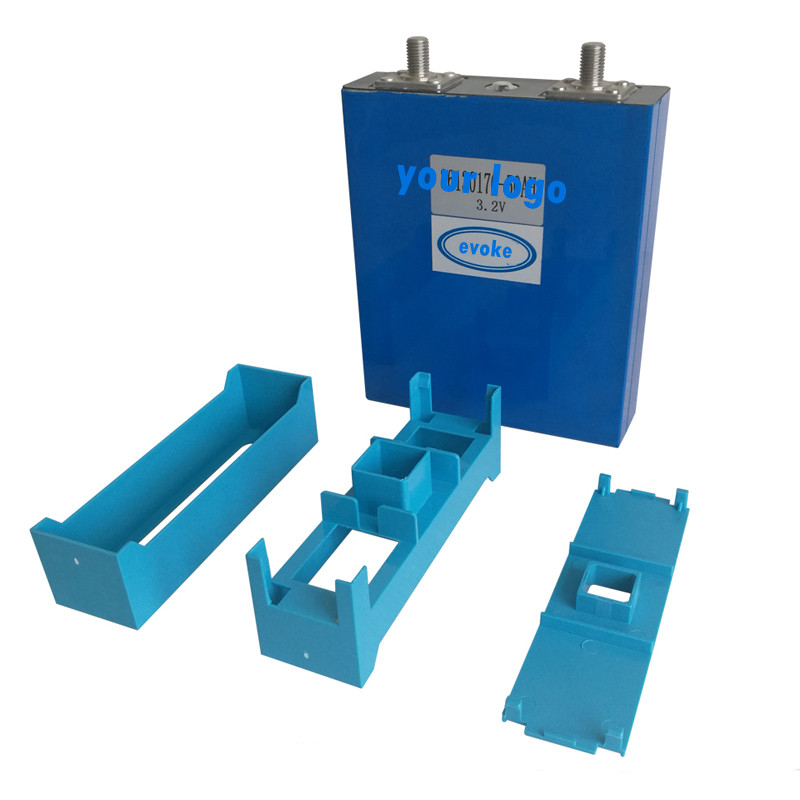
Which is better, lead battery or lithium battery
lithium battery
“Lithium battery” is a type of battery that uses lithium metal or lithium alloy as the negative electrode material and uses a non-aqueous electrolyte solution. In 1912, the lithium metal battery was first proposed and studied by GilbertN.Lewis. In the 1970s, M.S. WhitTIngham proposed and began to study lithium-ion batteries. Due to the very active chemical properties of lithium metal, the processing, storage and use of lithium metal have very high environmental requirements. Therefore, lithium batteries have not been used for a long time. With the development of science and technology, lithium batteries have now become the mainstream.
Lithium batteries can be roughly divided into two categories: lithium metal batteries and lithium ion batteries. Lithium-ion batteries do not contain lithium in the metallic state and are rechargeable. The fifth generation of rechargeable batteries, lithium metal batteries, was born in 1996, and its safety, specific capacity, self-discharge rate and performance-price ratio are better than lithium-ion batteries. Due to its own high technical requirements, only companies in a few countries are now producing such lithium metal batteries.
We know that electric vehicles have been developed in China for more than 20 years, and their advantages such as energy saving, environmental protection, convenience and speed are very popular, but the disadvantages are also obvious. Before starting, many experts and scholars are also working hard, thinking about how to replace the kidney or strengthen the kidney to restore the self-confidence of electric vehicles. Among them, lithium batteries are a good solution now, and there is a great possibility to reproduce the performance of electric vehicles. majestic.
Lead-acid batteries
A lead-acid battery (VRLA) is a battery whose electrodes are mainly made of lead and its oxides, and the electrolyte is a sulfuric acid solution. In the discharge state of the lead-acid battery, the main component of the positive electrode is lead dioxide, and the main component of the negative electrode is lead; in the charged state, the main component of the positive and negative electrodes is lead sulfate.
The nominal voltage of a single-cell lead-acid battery is 2.0V, which can be discharged to 1.5V and charged to 2.4V; in applications, 6 single-cell lead-acid batteries are often connected in series to form a nominal 12V lead-acid battery , and 24V, 36V, 48V, etc.
Which is better, lead battery or lithium battery
With the update and iteration of electric energy vehicle battery technology, the development of lithium batteries has a tendency to rise from safflower double sticks to the leader of the community. However, it is only rising. Limited by its own performance, cost performance and other reasons, there is still a long way to go to replace the position of the lead-acid battery big brother, and the big brother lead-acid battery is also constantly making self-breakthroughs.
Lead-acid batteries
1: Lead-acid batteries are easy to support, and you can continue to use them if you break and beat them with a little repair.
2: The price is cheap. The reason why lead-acid batteries have been able to traverse the battery industry for many years and take the position of the boss is all because of this reason! Cheap, except cheap or cheap.
3: Recyclable and reverse repair, lead-acid batteries come with recyclable skills. After they are worn out, they can be exchanged for new ones. After making up the difference, a new set of batteries can be exchanged to minimize losses, which is a big benefit to users.
Let’s also look at the shortcomings of lead-acid batteries: large volume and weight, limited battery capacity, and short lifespan. Lead-acid batteries are generally within 400 times of deep charge and deep discharge, have memory, and have a lifespan of about two years.
lithium battery
1: Light weight and small size. Compared with the lead-acid battery of the same capacity on the market, the lithium battery, which has been light and small since childhood, is 2/3 of the volume of the lead-acid battery and about 1/3 of the weight of the lead-acid battery. Lithium batteries of the same volume have higher capacity than lead-acid batteries, and the reduction in weight increases the battery life of electric vehicles by about 10%.
2: Durable and improved lifespan. Lithium batteries are well-known for health preservation. The average lifespan of lithium batteries is about 4 years, which is about 1.5 times longer than that of lead-acid batteries. It can be charged and discharged more than 500 times. The battery has no memory and strong shock resistance.
3: Overcharge resistance, good charge and discharge resistance. Under normal temperature, the lithium battery can be continuously charged for 48 hours without any accidents such as battery expansion, leakage and rupture, and the capacity remains above 95%. And under the special charger, fast charging and discharging can be carried out.
Although lithium batteries have many advantages, their disadvantages are also more obvious.
The production cost of lithium batteries is high, and the expensive labor cost of production equipment accounts for about 40% of the production cost, and the price is about three times that of lead-acid batteries.
The most important problem is that lithium batteries have a fire and explosion safety hazard, especially when consumers are deceived by profiteers without knowing it and lead to buying inferior lithium batteries. In electric vehicles, the sealing conditions are not very good, and it is easy to get wet and cause contact. Poor and other reasons lead to possible safety hazards.
However, the technical performance of lithium batteries is constantly improving, and high-safety materials are also being used. Do you need lithium batteries with good safety performance? Contact us if you need them. We have a complete set of solutions.