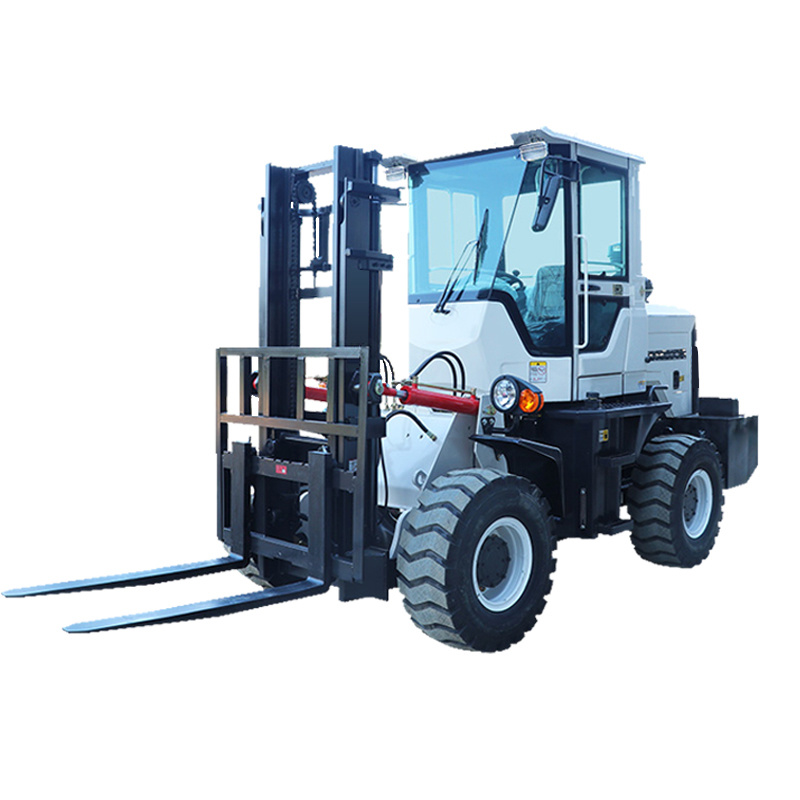
what kind of batteries do forklifts use
The advice provided to forklift users on how to choose the right forklift battery for your warehouse is for reference only.
Choosing an industrial battery can be complicated — there are so many options, it can be difficult to decide which factors are most important — capacity, chemistry, charging speed, cycle life, brand, price, and more.
The requirements of your material handling operation are critical to choosing the right forklift battery.
(1) Start with your forklift and forklift make and model specifications
Your choice of equipment power source is primarily determined by the technical specifications of the forklift. As users of diesel- or propane-powered Category 4 and Category 5 ride-on forklifts continue to convert to Category 1 electric forklifts, more than half of today’s forklifts are battery powered. Durable, high-capacity lithium-ion (Li-ion) batteries are already available for the most demanding applications, handling heavy and bulky loads.
Here are the main specs you need to pay attention to;
Battery voltage (V) and capacity (Ah)
Several standard voltage options (12V, 24V, 36V, 48V, 72V, 80V) and different capacity options (from 100Ah to 1000Ah and higher) are available for various lift truck models.
For example, a 24V 210Ah battery is typically used in a 4000 lb pallet lift, while an 80V 1050Ah is suitable for a counterbalanced sit-in forklift to handle loads up to 20K lbs.
Dimensions of the battery case
Forklift battery cabinet dimensions are often unique, so finding a perfect and precise fit is critical. It is also important to consider the type of cable connector and its location on the battery and truck. Some OEM battery manufacturers have two different sized battery cases.
Battery weight and counterweight
Different forklift models have different recommended battery weight requirements that you should consider when choosing. Additional counterweights are added to batteries intended for heavy duty applications.
Comparison of Lithium Batteries and Lead Acid Forklift Batteries in Different Types of Electric Forklifts (Class I, II and III)
Lithium batteries are best used in Class I, II and III forklifts and other off-road electric vehicles such as sweepers and scrubbers, tugboats, and more. what is the reason? Lithium batteries have 3 times the life of lead-acid batteries, excellent safety, minimal maintenance, stable operation at low or high temperatures, and high energy capacity in kilowatt-hours.
Lithium iron phosphate (LFP) and lithium nickel cobalt aluminate (LiNiCoAlO2 or NCA and NMC), these batteries are used in electric forklifts.
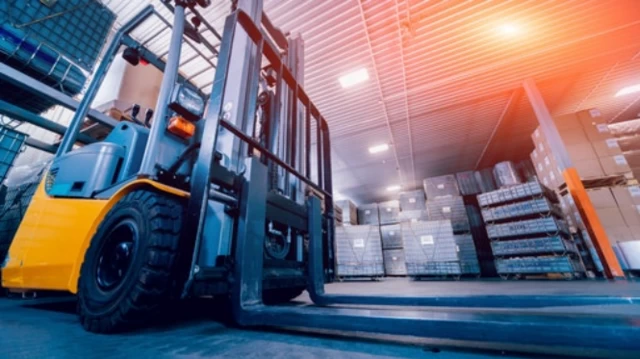
These types of lithium batteries are more commonly used in passenger electric vehicles (EVs) and electronics due to their lower overall weight and higher energy density per kilogram. Until recently, lead-acid batteries have been widely used in all types of electric forklifts. TPPL is a newer version of this type of battery. It has higher efficiency and higher charging speed, but only compared to traditional flooded lead-acid technology or sealed lead-acid batteries such as Absorbed Glass Mat (AGM).
In most cases, lithium-ion batteries are a more economical and efficient option for industrial applications than any lead-acid battery, including AGM or TPPL batteries.
Forklift – Battery Communication
Applications where the forklift’s Controller Area Network (CAN bus) allows microcontrollers and devices to communicate with each other without a host computer. Not all battery brands are fully integrated with all forklift models via the CAN bus. An external battery discharge indicator (BDI) can then optionally be used, which provides the operator with visual and audible signals of battery charge status and readiness for work.
(2) Consider the details of your material handling equipment application and your company policy
The performance of the battery must be suitable for the actual use of the forklift or lift. Sometimes the same forklift is used in different ways (eg handling different loads) within the same facility. In this case, you may need to equip them with different batteries. Your company policies and standards may also play a role.
Load weight, lift height and travel distance
The heavier the load, the higher the lift, and the longer the route, the more battery capacity you’ll need to last through the day. Take into account the average and maximum weight of the load, the distance traveled, the height of the lift and the ramp. The most demanding applications, such as food and beverages, can have load weights of 15,000-20,000 lbs.
Forklift attachment
As with the weight of the load, the size of the pallet, or the shape of the load that needs to be moved, using a heavy-duty forklift attachment will require more “oil in the tank” — higher battery capacity. Hydraulic paper hold clips are a good example where you need to plan for some extra power.
refrigerator or cooler
Will the forklift operate in a refrigerator or freezer? For low temperature work, you may want to choose a forklift battery with additional insulation and heating elements.
Charging time and speed: comparative advantages of lithium iron phosphate (LFP) and lithium nickel cobalt aluminate (LiNiCoAlO2 or NCA and NMC) versus lead-acid batteries
Lithium iron phosphate (LFP) and lithium nickel cobalt aluminate (LiNiCoAlO2 or NCA and NMC) single cell operation eliminates the need to replace old cells with new ones during operation. In most cases, this is only possible with opportunistic charging of Li-ion batteries during rest periods, as it is convenient for the operator and does not interfere with the production process. A few 15-minute breaks throughout the day are enough to keep the lithium battery above 40% charge. This is a recommended charging mode that provides optimum performance for the forklift and helps extend battery life.
Data for fleet management needs
Forklift fleet management data is primarily used to track maintenance, improve safety compliance and maximize equipment utilization. Data from a battery management system (BMS) can greatly enrich or replace data from other sources, including details such as power consumption, timing of charging and idle events, battery specifications, and more.
Easy data access and user interface are becoming the most important factors when choosing a battery.
Corporate Safety and Sustainability Standards
Lithium batteries are the safest choice for industrial forklifts. They do not have any of the problems of lead acid technology, such as corrosion and sulfation, and do not emit any pollutants. They eliminate the risk of accidents that come with changing heavy batteries every day. This benefit is critical in industries such as food and beverages. With a lithium-ion electric forklift battery, you don’t need a special fume chamber to charge it.
(3) Evaluate battery prices and future maintenance costs
maintain
Lithium-ion batteries do not require routine maintenance. Lead-acid batteries need to be filled with water, cleaned after the occasional acid spill, and periodically equalized (a special charging mode is applied to equalize the battery’s charge). Labor and external service costs tend to increase as lead-acid power plants age, resulting in reduced uptime and increasing operating costs.
Battery Purchase Price and Total Cost of Ownership
The purchase price of lead acid power units and chargers is lower than that of lithium battery packs. However, when switching to lithium, you need to take into account the increased uptime, 3X increase in battery life and lower maintenance costs offered by single-cell operation and flexible opportunistic charging plans.
Calculations clearly show that compared to lead-acid batteries, lithium batteries can save 40% in total cost of ownership over 2-4 years. Among lithium batteries, lithium iron phosphate (LFP) is a more economical and efficient option than NMC lithium batteries. In most cases, switching to lithium batteries makes economic sense, even if you operate a small fleet or a forklift.
How often do you buy new batteries for your forklift?
Lithium batteries last longer than any lead-acid battery pack. The life of a lead-acid battery is 1,000-1,500 cycles or less. Lithium-ion has a lifespan of at least 3000+ cycles, depending on the application.
TPPL lead-acid batteries have a longer lifespan than traditional liquid-filled or sealed AGM batteries, but they can’t even come close to lithium-ion technology in this regard.
In lithium batteries, lithium iron phosphate (LFP) exhibits longer cycle life than lithium nickel cobalt aluminate (LiNiCoAlO2 or NCA and NMC).
battery charger
The compact lithium-ion forklift battery charger can be conveniently placed around the facility for a chance to recharge during breaks and lunches. Lead-acid batteries require large-scale charging stations and need to be charged in ventilated charging rooms to avoid the risk of contamination from acid spills and fumes during charging. Eliminating a dedicated battery room and repurposing that space for profit often has a big impact on the bottom line.
(4) How to choose battery brand and supplier?
Consultative sales
Selecting and sourcing the right battery can take a lot of effort and time. Your supplier will need to provide professional information on what battery settings are optimal and what are the trade-offs and must-haves for your specific equipment and operation.
Delivery time and shipping accuracy
A plug-and-play solution goes beyond simple installation and setup. It includes due diligence on battery configuration for specific tasks and applications, connection protocols (such as CAN bus integration), safety features and more. So, on the one hand, you want the battery to be delivered in time when your new or existing forklift is ready to start. On the other hand, if you only choose existing products and place an order in a hurry, you may find that the forklift or your material handling operation is not compatible with batteries.
Support and service in your area and past customer experience
The availability of forklift battery support and service in your area affects how quickly you can resolve equipment problems. Is your supplier ready to do everything possible to make sure your equipment works within the first 24 hours, no matter what? Ask previous customers and OEM dealers for their advice and past experience with the brand of battery you plan to buy.
product quality
Product quality mainly refers to the extent to which the battery can meet the requirements of operation. Correct capacity, cables, charging speed settings, weather protection, and incorrect handling by inexperienced forklift operators, etc. – all determine the quality of the battery’s performance in the field, not the numbers on the spec sheet and image.