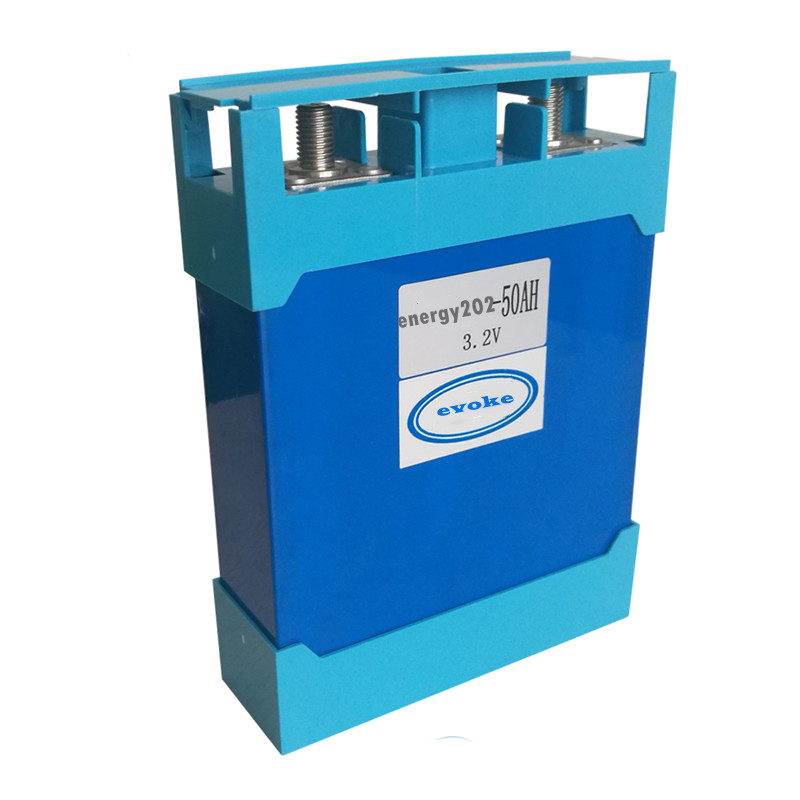
Introduction to the use, maintenance and maintenance of lithium batteries
A lithium-ion battery is a secondary battery (rechargeable battery) that mainly relies on the movement of lithium ions between the positive and negative electrodes to work. During the charging and discharging process, Li+ intercalates and deintercalates back and forth between the two electrodes: during charging, Li+ is deintercalated from the positive electrode, intercalated into the negative electrode through the electrolyte, and the negative electrode is in a lithium-rich state; during discharge, the opposite is true. Batteries generally use materials containing lithium as electrodes, which are the representatives of modern high-performance batteries. Lithium-based batteries are divided into lithium batteries and lithium-ion batteries. Mobile phones and laptops use lithium-ion batteries, commonly known as lithium-ion batteries, but real lithium-ion batteries are rarely used in daily electronic products due to their high risk.
The use and maintenance of lithium-ion batteries, the advantages and disadvantages of lithium-ion batteries
Lithium-ion battery (Li-ion, LithiumIonBattery): Lithium-ion batteries have the advantages of light weight, large capacity, no memory effect, etc., so they have been widely used – many digital devices now use lithium-ion batteries as power sources, although their The price is relatively expensive. Lithium-ion batteries have high energy density, their capacity is 1.5 to 2 times that of nickel-metal hydride batteries of the same weight, and they have a very low self-discharge rate. In addition, lithium-ion batteries have almost no “memory effect” and the advantages of no toxic substances are also important reasons for their wide application.
1 Requirements for charging lithium batteries
Compared with the requirements for the discharge environment (temperature), lithium batteries have more stringent requirements for the charging (temperature) environment. The best charging environment for lithium batteries is 5 to 45 degrees Celsius. Although 0 to 5 degrees Celsius can still be charged normally, the charging current needs to be relatively reduced (5 to 45 degrees Celsius environment) to maximize battery life.
Charging at high temperatures or above 45 degrees Celsius will reduce battery performance and even degrade the electrolyte in the battery. Low temperatures or below 0 degrees Celsius will result in increased internal resistance, resulting in longer charging times. In addition, when charging in an environment below 0 degrees Celsius, the battery will be in a sub-freezing state, which will cause [irreversible] damage to the battery. For a device powered by a lithium battery, such as a mobile phone, it is not recommended to charge it below 0 degrees Celsius unless you need to make an emergency call.
2 Lithium battery requirements for discharge environment
In terms of discharge, lithium batteries do not have too clear requirements for the environment, mainly because the battery cannot be used because the ambient temperature is high/low/hot/cold, and the discharge environment is relatively not as controllable as the charging environment (such as heat dissipation, etc. )
The [best working environment] of the battery is about 20 degrees Celsius, and it will provide [100%] of the nominal performance/capacity at 27 degrees Celsius. This is also the experimental environment (temperature) that general manufacturers use to test and measure battery performance and life.
The [recommended maximum temperature] for using the battery is 50 degrees Celsius, and the [maximum safe temperature] is 60 degrees Celsius. Most batteries will [stop working] at minus 20 degrees.
Above 25 to 30 degrees Celsius, each 10 degree Celsius increase in temperature increases battery performance (capacity release) by approximately 2%, but reduces battery cycle times/reduces lifespan.
Below 27 to 20 degrees Celsius, the battery capacity will decrease and the internal resistance will increase. Depending on the [different electrolyte used], some batteries can only provide 50% of the nominal capacity (reference) at 0 degrees Celsius. The lower the temperature, the less energy (capacity) the battery can release.
[Summary] The battery is also a consumable. The purpose of maintaining and extending the battery is to increase its service life within a controllable range and ensure the safety of use. If it affects our original purpose of use purely for a longer life, it will not be worth the loss.
3 Lithium battery cycles/life
Generally, we can see that the battery manufacturer will indicate the service life of the battery on the packaging, such as 500 cycles (charge and discharge times), that is, the battery can guarantee the normal capacity and life of the battery within 500 cycles of charge and discharge. However, how is this 500 cycles (charge and discharge times) defined? Battery manufacturers generally use the 80% DOD standard to define the life of a battery, that is, consume 80% of the battery capacity (the remaining 20%), and then fully charge it as a cycle (to simulate daily use).
In fact, there is currently no specific standard for what is the definition of a cycle and how to calculate it. But after testing by Battery University (the following are all lithium battery data), we know:
Charging from 0% to 100% can be cycled 300-500 times before the battery capacity drops to 70%;
Charging from 50% to 100% can be cycled 1200-1500 times before the battery capacity drops to 70%;
Charging from 25% to 100% can be cycled 2000-2500 times before the battery capacity drops to 70%;
Charging from 10% to 100% can cycle 3750-4700 times before the battery capacity drops to 70%.
[Summary] To sum up, you don’t have to worry too much about the number of cycles of the battery and how long it takes to charge the battery when charging. According to the experimental data of Battery University, you can rest assured that you can charge it as you go.
4 long-term storage environment for lithium batteries
Unlike other rechargeable batteries, the capacity of lithium-ion batteries decays slowly, not with the number of uses, but with the temperature. The possible mechanism is that the internal resistance gradually increases, so it is easier to reflect in electronic products with high operating current. [The relationship between storage temperature and capacity permanent loss rate is shown in the figure]
5 Lithium-ion battery discharge
Discharge termination voltage: The rated voltage of lithium-ion batteries is 3.6V (some products are 3.7V), and the termination discharge voltage is 2.5-2.75V (the battery factory gives the working voltage range or gives the termination discharge voltage, each parameter is slightly different ). The discharge termination voltage of the battery should not be less than 2.5 (n is the number of batteries connected in series). Continuing to discharge below the termination discharge voltage is called over-discharge. Over-discharge will shorten the battery life and cause battery failure in severe cases. When the battery is not in use, the battery should be charged to retain 20% of the electric capacity, and then be stored in a moisture-proof package. The voltage should be checked once in 3 to 6 months, and charged to ensure that the battery voltage is within the safe voltage value (above 3V).
Discharge current: Lithium-ion batteries are not suitable for high-current discharge. When discharging with excessive current, a higher temperature will be generated inside and the energy will be lost, reducing the discharge time. If there is no protective element in the battery, it will overheat and damage the battery. Therefore, the battery production factory gives the maximum discharge current, which cannot exceed the maximum discharge current given in the product characteristic table in use.
Discharge temperature: The discharge curves at different temperatures are different. At different temperatures, the discharge voltage and discharge time of lithium-ion batteries are also different. The battery should be discharged (worked) within the temperature range of -20°C to +60°C.
6 Storage and Transportation
Lithium-ion batteries can be stored in a clean, dry and ventilated environment with a temperature of -5 to 35°C and a relative humidity of not more than 75%. Avoid contact with corrosive substances, keep away from fire and heat sources, and do not place them in direct sunlight. place, the battery cannot be disassembled at will. If the battery is stored for a long time, the battery power should be kept at 30% to 50% of the nominal capacity. It is recommended that the stored battery be charged every 6 months.
Batteries should be packed in boxes for transportation. During transportation, they should be prevented from violent vibration, impact or extrusion, and protected from sunlight and rain. They can be transported by vehicles such as cars, trains, ships, and planes.
7 short circuit
Regarding the safety of lithium-ion batteries, please pay attention to your friends. Lithium-ion batteries are prone to short circuits during charging. While most Li-ion batteries come with protection circuits against short circuits, there are also explosion proof cords. But in many cases, this circuit will not necessarily work in various situations. The explosion-proof wire can also play a very limited role.
8 Overcharge
All lithium-ion batteries, including polymer lithium-ion batteries, lithium-iron batteries, etc., are very afraid of overcharging. Lithium-ion batteries are more likely to explode if charged for too long. The chemical properties of lithium are very active and easy to burn. When the battery is charged and discharged, the interior of the battery continues to heat up, and the gas generated during the activation process expands, increasing the internal pressure of the battery. When the pressure reaches a certain level, if the outer casing is scratched, it will rupture, causing liquid leakage, fire, and even explosion. Therefore, everyone should pay great attention to safety when using lithium-ion batteries.
9 Notes on charging
Overcharging and discharging Li-ion batteries can cause permanent damage to the positive and negative electrodes. Overdischarge leads to the collapse of the negative electrode carbon sheet structure, and the collapse will prevent lithium ions from being inserted during the charging process; overcharge causes too many lithium ions to intercalate into the negative electrode carbon structure, and some of the lithium ions can no longer be released. The charging amount is equal to the charging current multiplied by the charging time. When the charging control voltage is constant, the larger the charging current (the faster the charging speed), the smaller the charging capacity. Too fast battery charging speed and improper termination voltage control point will also result in insufficient battery capacity. In fact, some electrode active materials of the battery stop charging without sufficient reaction. This phenomenon of insufficient charging intensifies as the number of cycles increases.
10 Safety features of lithium-ion batteries:
For the assessment indicators of the safety performance of lithium-ion batteries, very strict standards are stipulated internationally. A qualified lithium-ion battery should meet the following conditions in terms of safety performance:
(1) Short circuit: no fire, no explosion
(2) Overcharge: no fire, no explosion
(3) Hot box test: no fire, no explosion (150℃ constant temperature for 10min)
(4) Needle piercing: no explosion (penetrate the battery with a Ф3mm nail)
(5) Flat impact: no fire, no explosion (a 10kg weight hits the battery from a height of 1M)
The advantages of lithium-ion batteries:
(1) The working voltage of a single battery with high voltage is as high as 3.7-3.8V (3.2V for lithium iron phosphate), which is 3 times that of Ni-Cd and Ni-MH batteries.
(2) The actual specific energy that the specific energy can achieve is about 555Wh/kg, that is, the material can reach a specific capacity of more than 150mAh/g (3–4 times that of Ni-Cd, 2–3 times that of Ni-MH) , which is close to about 88% of its theoretical value.
(3) The long cycle life can generally reach more than 500 times, or even more than 1000 times, and the lithium iron phosphate can reach more than 2000 times. For appliances with low current discharge, the service life of the battery will double the competitiveness of the appliance.
(4) Good safety performance, no pollution, no memory effect. As the predecessor of Li-ion, the lithium battery is a new type of lithium-ion battery, because the metal lithium is easy to form dendrites and short-circuit, which reduces its application fields: Li-ion does not contain cadmium, lead, mercury and other elements that pollute the environment: part of the process A major drawback of Ni-Cd batteries (such as sintered) is the “memory effect”, which seriously restricts the use of batteries, but Li-ion does not have this problem at all.
(5) The self-discharge rate of fully charged Li-ion stored at room temperature for 1 month is about 2%, which is much lower than 25-30% of Ni-Cd and 30-35% of Ni-MH.
(6) Fast charging 1C charging for 30 minutes can reach more than 80% of the nominal capacity, and phosphorus iron batteries can reach 90% of the nominal capacity in 10 minutes.
(7) Working temperature The working temperature is -25~45°C. With the improvement of the electrolyte and the positive electrode, it is expected to be expanded to -40~70°C.
(6) Incineration: no explosion (gas flame grill battery)
11 Disadvantages of lithium-ion batteries:
(1) Aging: Unlike other rechargeable batteries, the capacity of lithium-ion batteries will slowly decline, which is related to the number of uses and temperature. This phenomenon of decay can be expressed as a decrease in capacity or an increase in internal resistance. Because it is related to temperature, it is easier to reflect in electronic products with high operating current. Replacing graphite with lithium titanate appears to increase life. The relationship between storage temperature and the speed of permanent capacity loss: (2) Recovery rate: About 1% of new products from the factory need to be recycled for various reasons.
(3) Intolerant to overcharge: When overcharged, the excessively embedded lithium ions will be permanently fixed in the lattice and cannot be released again, which can lead to short battery life.
(4) Intolerant to overdischarge: During overdischarge, the electrode deintercalates too much lithium ions, which can lead to lattice collapse, thereby shortening the life.
Finally, let me give you a detailed summary of some habits and practices that can be done easily and prolong the performance of lithium batteries!
- The best charging temperature is 5 degrees Celsius to 45 degrees Celsius, do not charge below 0 degrees Celsius and above 45 degrees Celsius.
- The discharge temperature of lithium battery should be lower than 50 degrees Celsius as much as possible.
- Do not over-discharge, or charge when it is discharged to 0%, and it can be charged at any time.
- When storing lithium batteries for a long time, it is best to keep the remaining power between 40% and 60%, and the best temperature is close to 0 degrees Celsius.