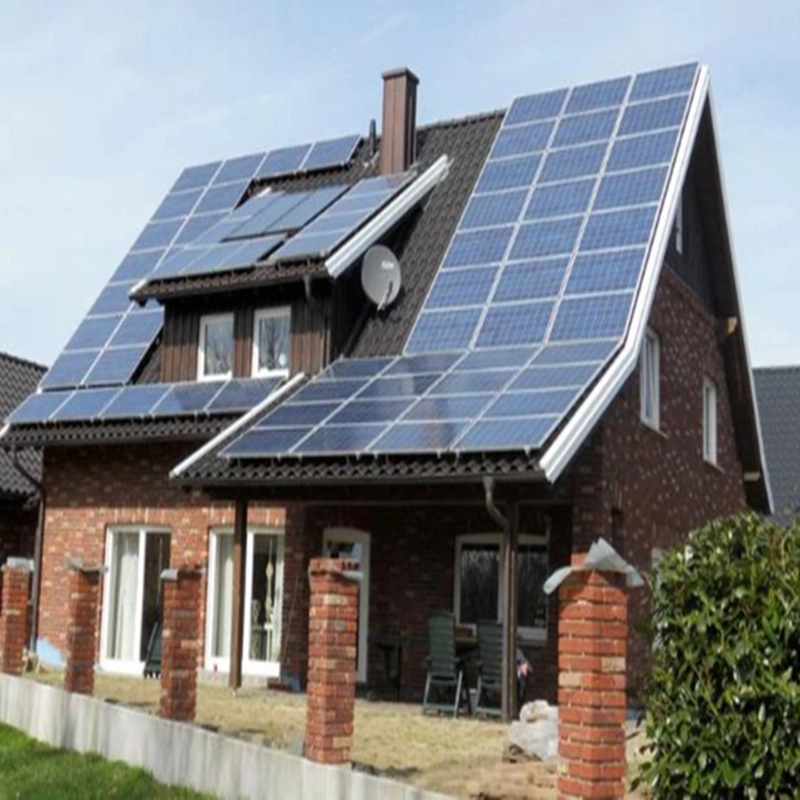
Musk: Turn your home into a solar power plant!
Power outages are a catastrophe in modern society, lights go out, all appliances stop working, not even a WiFi network. Xiao Hei can’t imagine how to live in a world without electricity.
So, how can we make this bad thing happen again? Musk may give us the answer. Recently, Musk, who has repeatedly made headlines with outrageous remarks, once again made a bold statement, claiming that he can transform ordinary houses into small power plants and bid farewell to power outages completely.
Dream origin: energy storage battery
Converting ordinary homes into power plants, Musk’s new idea sounds a bit bizarre. But if you know what Musk has done before, you won’t be surprised.
When most people think of Musk, the first time they think of Tesla cars, or SpaceX spacecraft. But in fact, Musk has created far more projects than we imagined, such as the super tunnel dug through Las Vegas, the sky Internet star chain project, paypal, and solar power generation projects.
As we all know, solar power generation is a very important part of new energy. Compared with traditional thermal power generation, solar power generation is quite clean. As early as 2008, Musk established SolarCity’s photovoltaic power generation project company. But it seems that solar power generation is not enough. The electricity generated during the day will be wasted before it is used up, so Musk launched the Powerwall in 2015.
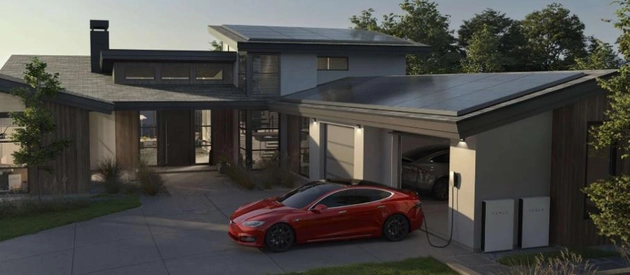
The Powerwall is a household battery that stores excess energy from solar energy during the day and saves it for use at night or later. Such a rechargeable battery provides the family with the guarantee of uninterrupted power supply, and at the same time can save the peak electricity cost of the household to a certain extent.
The advanced point of Powerwall is not how powerful its power storage is, but the advanced mode of it. The intelligent all-liquid temperature regulation system ensures the charging performance of the battery and pretreats the solar panel, allowing the entire system to obtain as much energy as possible. A storm watch system allows it to recharge the battery as quickly as possible before a cloudy or rainy day.
In addition, Musk has also made something in the field of combining solar panels with roofs, allowing the house to use solar tiles directly when it is built.
After the birth of the first generation of Powerwall, it attracted the attention of the United States, but the excessively expensive price discouraged ordinary users. According to the experience of Forbes reporters, the comprehensive electricity cost of Powerwall reached 30 cents per kilowatt-hour, which was much higher than the average electricity cost of 12.5 cents per kilowatt hour in the United States at that time. Spend.
The first generation of products was not strong, and Musk quickly launched the second generation of products. The Powerwall 2 installed 13.5kWh, with a sustained peak of 5kW, and a total throughput of 37.8 MWh, a 50% increase at 30 degrees Celsius. According to US media reviews, the lowest electricity price of the second-generation products reaches 17 cents per kilowatt-hour, which is barely acceptable.
How is the new idea developing?
The first and second generation of Powerwall are just energy storage batteries and have nothing to do with household power plants. The shift came last month, when Musk also floated the idea of a home power plant.
Traditional home solar power generation systems often encounter insufficient energy storage space. Plenty of solar energy is confined to tiny Powerwall storage batteries. Musk’s vision is to connect the Powerwall energy storage systems in all homes to generate and store electricity in the home. It even transmits power back to the grid, which can maintain an uninterrupted power state in the event of an accident in the utility grid.
Musk said that “only 160 million Powerwalls are needed to cover the electricity consumption of the United States”, “a super energy storage device formed by multiple Megapacks connected in series is enough to provide 6 hours of electricity for every home in San Francisco.”
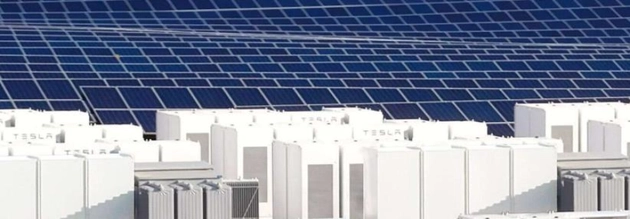
Megapack is a large-scale energy storage device. Just imagine, how huge the energy network will be constructed by the combination of household storage and public storage? This may be where Musk’s confidence lies.
However, Musk’s grand vision has also been met with many questions, and some experts believe that utilities and regulatory policy will need to address how to deal with the influx of so-called “distributed energy resources”, such as solar panels on residential roofs, which may be related to the The utility’s long-established business model goes against the grain.
At this stage, the home power plant plan is still in its infancy. The price of energy storage batteries is high, the management of distributed power plants is difficult, and the power distribution of home distributed grids still has a long way to go. Xiao Hei believes that the home power plant plan will not be realized until the price of energy storage batteries drops further and the cost of solar power generation and transmission is close to the average cost of the grid.